Psychosis vs Psychoses: What’s the Difference?
Psychosis is the singular form and refers to a mental condition that affects a person’s sense of reality. Psychoses is the plural form and refers to multiple cases or types of psychosis. The meaning remains the same, but the number changes.
Examples:
- The patient was diagnosed with psychosis.
- Doctors study different psychoses to improve treatment.
The confusion is understandable. Many people aren’t sure when to use psychosis or psychoses, how each word fits in a sentence, or whether they’re interchangeable. But here’s the kicker: using the wrong form can change the meaning of your writing and make it less accurate, especially in academic, medical, or professional contexts.
In this guide, you’ll learn the difference between Psychosis vs Psychoses, explore the meaning of psychosis, understand the plural of psychosis, and see psychosis vs psychoses examples in real sentences. You’ll also discover when to use psychosis or psychoses so you can write with confidence and precision every time.
What Does Psychosis Mean?
Psychosis describes a mental state where a person experiences difficulty distinguishing between what is real and what is not real.
It does not refer to one specific illness. Instead, psychosis is a collection of symptoms that can happen in several different mental health conditions, medical situations, or substance related conditions.
A person experiencing psychosis may have changes in:
- Thoughts
- Perceptions
- Emotions
- Behaviors
- Understanding of reality
For example, someone experiencing psychosis may hear a voice when nobody is speaking, believe something strongly despite evidence against it, or have difficulty organizing their thoughts.
However, psychosis looks different from person to person. Some people experience mild symptoms while others experience more severe disruptions in daily life.
Common Symptoms of Psychosis
Psychosis usually involves one or more of several major symptoms.
Hallucinations
Hallucinations happen when a person experiences sensations that feel real but do not come from an outside source.
The most common type involves hearing sounds or voices.
Examples include:
- Hearing someone call your name when nobody did
- Hearing voices commenting on your actions
- Seeing objects or people that others cannot see
Hallucinations can involve different senses:
| Type | Example |
| Auditory hallucinations | Hearing voices or sounds |
| Visual hallucinations | Seeing things that are not present |
| Tactile hallucinations | Feeling sensations without a physical cause |
| Olfactory hallucinations | Smelling something that others cannot detect |
Delusions
Delusions are strong beliefs that remain even when evidence shows the belief may not be accurate.
A person experiencing a delusion usually feels completely convinced that the belief is true.
Examples may include:
- Believing someone is secretly following them without evidence
- Believing they have special powers or abilities
- Believing ordinary events contain hidden personal messages
It is important to understand that delusions are not simply misunderstandings. They are deeply held beliefs that can feel completely real to the person experiencing them.
Disorganized Thinking and Speech
Psychosis can affect the way someone organizes thoughts and communicates.
A person may:
- Jump quickly between unrelated ideas
- Give answers that seem difficult to follow
- Struggle to maintain a clear conversation
For example, a person might begin discussing one topic, suddenly move to another unrelated idea, and have difficulty explaining how the two ideas connect.
Changes in Behavior and Emotions
Psychosis can also affect daily behavior.
Possible changes include:
- Social withdrawal
- Difficulty completing normal activities
- Unusual emotional reactions
- Reduced motivation
- Confusion or distress
These changes can be challenging for the person experiencing them and for their family members.
What Does Psychoses Mean?
Psychoses is the plural form of psychosis.
It does not describe a separate disorder. It simply refers to more than one psychotic condition, experience, or episode.
Medical researchers and mental health professionals often use the term psychoses when comparing different forms of psychosis.
For example:
“Researchers examined different psychoses associated with mental health disorders, medical conditions, and substance use.”
In this sentence, the writer is discussing multiple forms of psychosis rather than one specific experience.
Examples of How Psychoses Is Used
The word psychoses appears more often in academic or scientific writing than in everyday conversations.
Examples:
- “The study explored several psychoses that affect perception and thinking.”
- “Different psychoses may have different causes and treatment approaches.”
- “Doctors evaluated various psychoses linked to neurological conditions.”
Most people usually use the word psychosis because conversations often focus on one person’s experience or one general condition.
Psychosis vs Psychoses: Key Differences Explained
The biggest difference between psychosis vs psychoses is the number being discussed.
Psychosis = one
Psychoses = more than one
The words do not represent different levels of illness.
Someone experiencing psychosis does not have a less serious condition than someone discussed under psychoses. The plural form simply allows writers to talk about multiple examples.
| Feature | Psychosis | Psychoses |
| Word form | Singular | Plural |
| Meaning | One psychotic experience or condition | Multiple psychotic experiences or conditions |
| Common usage | Everyday conversations and medical discussions | Research, academic writing, comparisons |
| Refers to severity? | No | No |
| Example | “The patient experienced psychosis.” | “The researchers studied several psychoses.” |
Is Psychosis the Same as Psychoses?
Yes, they describe the same general concept, but they are used differently.
The difference between them is similar to other singular and plural medical words.
Examples:
| Singular | Plural |
| Diagnosis | Diagnoses |
| Crisis | Crises |
| Analysis | Analyses |
| Psychosis | Psychoses |
The spelling changes because psychosis comes from Greek based terminology where many words ending in “sis” form their plural by changing to “ses.”
Does Psychoses Mean a More Severe Form of Psychosis?
No.
This is one of the most common misunderstandings.
Psychoses does not mean:
- A worse form of psychosis
- A chronic form of psychosis
- A more dangerous condition
- A separate diagnosis
It only means that someone is referring to multiple examples.
For instance:
- “Psychosis can occur in several disorders.”
- “Different psychoses can occur in several disorders.”
Both sentences discuss the same general topic. The second sentence simply emphasizes multiple forms.
Psychosis in Mental Health and Medical Contexts
Psychosis can occur in several situations. It is not limited to one diagnosis.
Healthcare professionals evaluate the cause behind psychotic symptoms because treatment depends on the underlying reason.
Some conditions associated with psychosis include:
- Schizophrenia
- Bipolar disorder
- Severe depression with psychotic features
- Substance induced psychotic disorders
- Certain neurological conditions
A person experiencing psychosis may need a complete evaluation to understand what is causing the symptoms.
Psychosis Is a Symptom, Not Always a Diagnosis
One important fact about psychosis is that it does not automatically mean someone has a lifelong psychiatric disorder.
Psychosis can happen because of different factors, including:
Mental Health Conditions
Some psychiatric disorders can include psychotic symptoms.
Examples:
- Schizophrenia spectrum disorders
- Bipolar disorder with psychotic features
- Major depression with psychotic features
Substance Related Causes
Certain substances can trigger psychotic symptoms.
Examples include:
- Some recreational drugs
- Heavy alcohol use or withdrawal
- Certain medications
Medical Conditions
Physical health conditions can sometimes affect brain function and contribute to psychosis.
Examples include:
- Neurological disorders
- Brain injuries
- Certain infections
- Severe sleep deprivation
Types of Psychosis and Why the Term “Psychoses” Is Used
Understanding different types of psychosis helps explain why professionals sometimes use the word psychoses. When researchers discuss several forms of psychotic experiences, they need a plural term to describe them accurately.
Psychosis can develop from different causes, and each type may involve different symptoms, patterns, and treatment approaches.
The main categories include primary psychosis and secondary psychosis.
Primary Psychotic Disorders
Primary psychosis refers to situations where psychotic symptoms are a central part of the disorder itself.
These conditions usually involve changes in thinking, perception, and reality testing.
Schizophrenia Spectrum Disorders
Schizophrenia is one of the most recognized disorders associated with psychosis.
People with schizophrenia may experience:
- Hallucinations
- Delusions
- Disorganized speech
- Changes in motivation
- Difficulty with social functioning
However, schizophrenia affects people differently. Some individuals experience frequent symptoms, while others manage symptoms successfully with treatment and support.
Schizoaffective Disorder
Schizoaffective disorder includes symptoms of both:
- Psychosis
- Mood disturbances such as depression or mania
A person may experience hallucinations or delusions alongside major mood episodes.
Because this condition involves both mood and psychotic symptoms, healthcare professionals carefully evaluate symptom patterns before making a diagnosis.
Brief Psychotic Disorder
Brief psychotic disorder involves psychotic symptoms that last for a shorter period.
Possible symptoms include:
- Sudden hallucinations
- Delusions
- Confused thinking
- Changes in behavior
Some people recover completely after the episode, especially when they receive appropriate care.
Delusional Disorder
Delusional disorder mainly involves persistent delusions.
Unlike some other psychotic disorders, people with delusional disorder may not experience major disruptions in everyday functioning outside of their specific beliefs.
For example, someone may hold a fixed false belief while still maintaining relationships, work responsibilities, and daily routines.
Secondary Psychosis: When Another Factor Causes Symptoms
Secondary psychosis happens when psychotic symptoms develop because of another condition or outside factor.
This type of psychosis shows why the word psychoses can be useful. Different causes can lead to different psychotic experiences.
| Type of Psychosis | Possible Causes |
| Substance induced psychosis | Drugs, alcohol, or medication effects |
| Medical psychosis | Brain disorders or physical illnesses |
| Mood related psychosis | Severe depression or bipolar episodes |
| Trauma related psychosis | Extreme stress or traumatic experiences |
Substance Induced Psychosis
Certain substances can affect brain chemistry and trigger psychotic symptoms.
Possible signs include:
- Seeing or hearing things that are not present
- Extreme suspiciousness
- Confused thinking
- Unusual beliefs
The symptoms may improve after stopping the substance, but the timeline depends on the substance involved and the individual’s health.
Psychosis Related to Medical Conditions
Some medical conditions can affect brain function and contribute to psychotic symptoms.
Examples include:
- Neurological disorders
- Brain injuries
- Certain infections
- Hormonal or metabolic problems
Doctors usually investigate physical causes when someone develops sudden psychotic symptoms, especially if there is no previous history of mental health problems.
Psychosis vs Psychoses vs Psychotic: Understanding the Difference
Many people also confuse psychosis, psychoses, and psychotic.
Although these words look similar, they serve different purposes.
| Word | Meaning | Example |
| Psychosis | A condition or experience involving a break from reality | “The patient experienced psychosis.” |
| Psychoses | Multiple forms or cases of psychosis | “Researchers studied different psychoses.” |
| Psychotic | An adjective describing something related to psychosis | “The doctor evaluated psychotic symptoms.” |
A simple way to remember:
- Psychosis is the thing.
- Psychoses means more than one thing.
- Psychotic describes something connected to that thing.
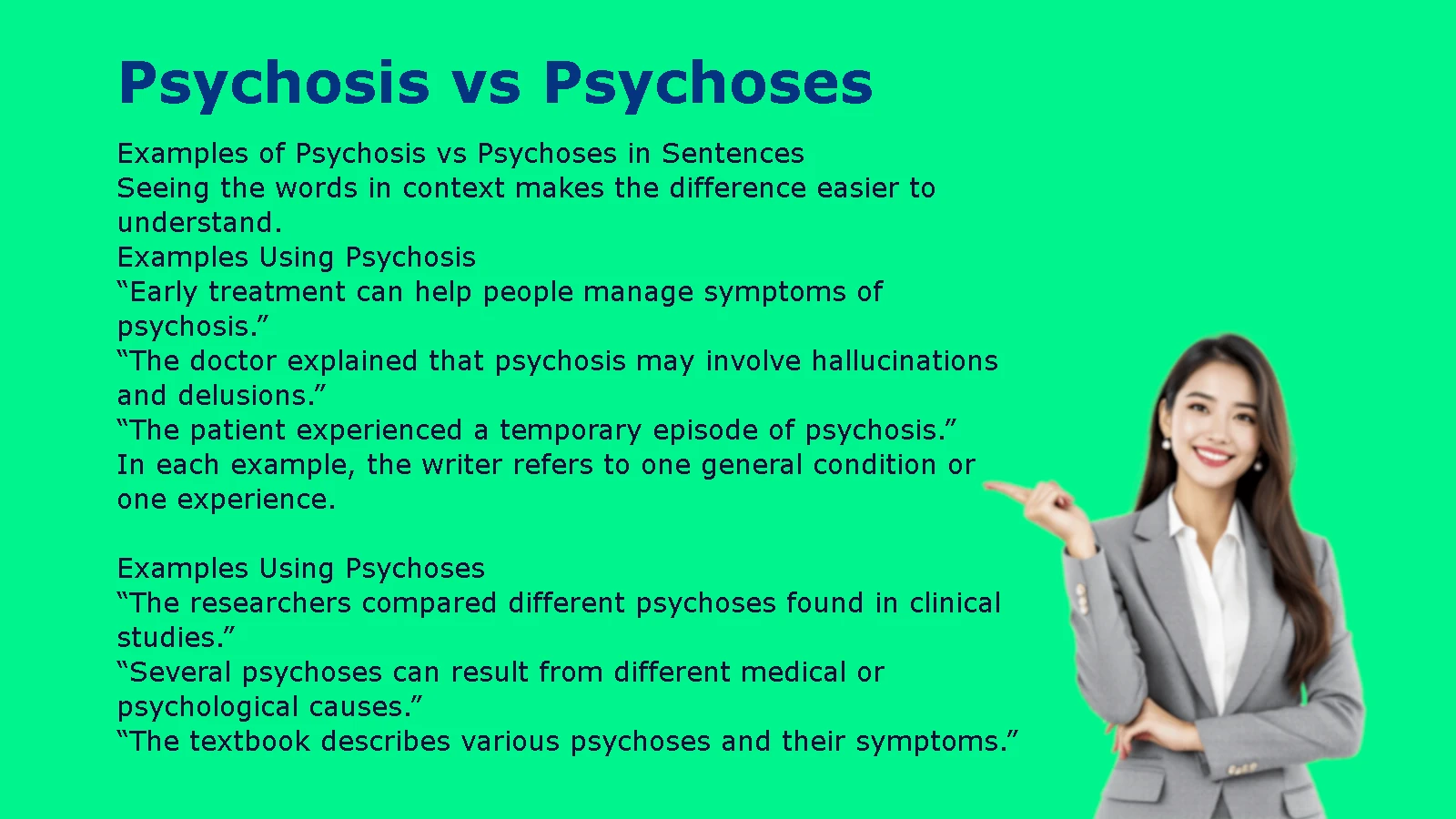
Examples of Psychosis vs Psychoses in Sentences
Seeing the words in context makes the difference easier to understand.
Examples Using Psychosis
- “Early treatment can help people manage symptoms of psychosis.”
- “The doctor explained that psychosis may involve hallucinations and delusions.”
- “The patient experienced a temporary episode of psychosis.”
In each example, the writer refers to one general condition or one experience.
Examples Using Psychoses
- “The researchers compared different psychoses found in clinical studies.”
- “Several psychoses can result from different medical or psychological causes.”
- “The textbook describes various psychoses and their symptoms.”
Here, the writer discusses multiple forms or examples.
Real World Example: How Context Changes the Word Choice
Imagine a mental health researcher studying several groups of patients.
If the researcher examines one person’s experience, they might write:
“The study examined the person’s experience of psychosis.”
If the researcher compares several conditions, they might write:
“The study examined different psychoses across patient groups.”
The subject has changed from one experience to many experiences.
The meaning is connected, but the grammar changes.
Why Correct Terminology Matters in Mental Health Writing
Words shape understanding.
Using the correct term helps readers understand whether someone is discussing:
- One person’s experience
- A general symptom
- Several disorders
- Multiple research examples
Incorrect terminology can create unnecessary confusion.
For example, someone reading “psychoses” might assume it describes a specific diagnosis. However, it simply indicates that multiple forms of psychosis are being discussed.
Clear language matters because mental health topics already involve complex ideas. Simple, accurate wording makes information easier to understand.
Common Questions About Psychosis and Psychoses
Is Psychosis Singular or Plural?
Psychosis is singular.
It refers to one psychotic experience, episode, or condition.
Example:
- “The patient experienced psychosis.”
What Is the Plural of Psychosis?
The plural form is psychoses.
Example:
- “Researchers studied different psychoses.”
The pronunciation also changes slightly:
- Psychosis: sy KOH sis
- Psychoses: sy KOH seez
Is Psychoses a Medical Diagnosis?
No.
Psychoses is not a diagnosis.
It is simply the plural form of psychosis.
A doctor would diagnose a specific condition, such as a psychotic disorder, rather than diagnose someone with “psychoses.”
Can Someone Experience More Than One Type of Psychosis?
Yes.
A person may experience psychotic symptoms from different causes at different times.
For example:
- A person may experience psychosis during a severe mood episode.
- Another person may experience psychosis because of substance use.
- Someone else may experience psychosis linked to a medical condition.
The causes and symptoms can vary significantly.
Is Psychosis Always Permanent?
No.
Psychosis can be temporary or ongoing depending on the cause.
Some episodes improve after:
- Medical treatment
- Therapy
- Addressing substance use
- Managing an underlying condition
The outcome depends on many factors, including the cause, available support, and early intervention.
Facts About Psychosis
Here are important facts that help clarify the topic:
| Fact | Explanation |
| Psychosis is not one single illness | It is a group of symptoms that can appear in different conditions |
| Anyone can experience psychosis | It can occur across different ages and backgrounds |
| Psychosis does not define a person | A person is more than their symptoms |
| Early support can help | Treatment may improve symptoms and daily functioning |
| Psychoses is simply plural | It does not mean a more severe condition |
How Doctors Evaluate Psychosis
When someone experiences symptoms of psychosis, healthcare professionals usually look at several areas.
The evaluation may include:
Medical History
Doctors may ask about:
- Previous symptoms
- Family history
- Current medications
- Substance use
- Recent stress or life changes
Mental Health Assessment
Professionals evaluate:
- Thoughts
- Mood
- Behavior
- Perceptions
- Ability to function daily
Physical Examination and Testing
Depending on the situation, doctors may perform tests to rule out medical causes.
These evaluations help identify the most appropriate treatment approach.
Why People Search for “Psychosis vs Psychoses”
Many people search this phrase because they encounter both words in different places.
Common reasons include:
- Reading medical articles
- Studying psychology
- Writing academic papers
- Understanding mental health terminology
- Checking whether “psychoses” is a separate condition
The answer is straightforward:
Psychosis and psychoses describe the same concept. The difference is that psychosis is singular and psychoses is plural.
Quick Reference: Psychosis vs Psychoses
| Question | Answer |
| Is psychosis singular? | Yes |
| Is psychoses plural? | Yes |
| Are they different illnesses? | No |
| Does psychoses mean worse symptoms? | No |
| Which term is more common? | Psychosis |
| Where is psychoses commonly used? | Research and academic writing |
How to Use Psychosis and Psychoses Correctly in Writing
Choosing between psychosis and psychoses becomes easier when you focus on the number of experiences, conditions, or cases you are describing.
If you are talking about one experience, use psychosis.
If you are discussing multiple experiences, use psychoses.
The rule is simple:
One = psychosis. More than one = psychoses.
However, many writers make mistakes because the words look like they refer to different medical concepts. They do not. The difference is purely grammatical.
Examples of Correct Usage
Correct Use of Psychosis
- “The patient experienced psychosis after a severe mental health episode.”
- “Psychosis can involve hallucinations, delusions, and changes in thinking.”
- “Early treatment may help manage symptoms of psychosis.”
In each sentence, the writer refers to a general condition or a single experience.
Correct Use of Psychoses
- “Researchers examined several psychoses linked to different medical conditions.”
- “The textbook describes various psychoses that affect perception and behavior.”
- “Scientists continue studying different forms of psychoses.”
These examples refer to multiple types, cases, or categories.
Common Mistakes When Using Psychosis and Psychoses
Even though the difference is straightforward, people often misuse these terms.
Understanding common mistakes can help you write more accurately.
Mistake: Treating Psychoses as a Separate Disorder
Incorrect:
“Psychoses is a more serious mental illness than psychosis.”
Why it is incorrect:
Psychoses is not a separate disorder. It is simply the plural form of psychosis.
Correct:
“Psychoses refers to multiple forms or cases of psychosis.”
Mistake: Using Psychoses When Talking About One Person
Incorrect:
“The patient was diagnosed with psychoses.”
Why it is incorrect:
The sentence suggests multiple psychotic conditions.
Correct:
“The patient experienced psychosis.”
Mistake: Assuming Psychosis Always Means Schizophrenia
Incorrect:
“A person with psychosis always has schizophrenia.”
Why it is incorrect:
Psychosis can happen for many reasons.
Possible causes include:
- Schizophrenia spectrum disorders
- Mood disorders
- Substance effects
- Medical conditions
- Severe stress or trauma
Psychosis is a symptom or experience, not automatically one specific diagnosis.
Psychosis vs Psychoses: A Simple Memory Trick
If you struggle to remember the difference, use this comparison:
Imagine the word book.
- One book = a book
- Many books = books
The same idea applies:
- One psychosis = psychosis
- Many psychoses = psychoses
The spelling changes because of medical language rules, but the meaning follows the same singular and plural pattern.
The Role of Psychosis in Mental Health Awareness
Understanding terms like psychosis vs psychoses does more than improve vocabulary. It also helps reduce misunderstandings about mental health.
Many people still associate psychosis with stereotypes from movies or inaccurate information. In reality, psychosis is a complex experience that can affect people in different ways.
A person experiencing psychosis may:
- Feel confused about what is happening
- Experience frightening thoughts or sensations
- Need professional support
- Recover with proper care
Using respectful and accurate language helps create better conversations.
Supporting Someone Experiencing Psychosis
If someone you know experiences psychosis, the most helpful approach is calm, respectful support.
Helpful Things to Do
Listen Without Arguing
A person experiencing psychosis may believe something that does not match reality.
Instead of saying:
“That is completely wrong.”
Try:
“I understand that feels real to you. Let’s talk about what you’re experiencing.”
This approach keeps communication open.
Encourage Professional Help
Psychosis can have many causes, so professional evaluation matters.
Support may involve:
- Mental health professionals
- Medical doctors
- Therapy
- Medication when appropriate
- Family support
Stay Calm and Patient
Psychosis can be overwhelming.
A calm environment may help reduce stress.
Helpful actions include:
- Speaking slowly
- Using simple sentences
- Avoiding confrontation
- Offering reassurance
When Should Someone Seek Help for Psychosis?
A person should consider professional support when symptoms begin interfering with daily life.
Warning signs may include:
- Hearing voices or seeing things others cannot
- Strong beliefs that cause distress
- Difficulty telling what is real
- Major changes in behavior
- Withdrawal from normal activities
- Trouble caring for basic needs
Seeking help early can make a significant difference.
Treatment and Management of Psychosis
Treatment depends on the underlying cause.
There is no single approach that works for everyone.
Common treatments may include:
Medication
Healthcare professionals may prescribe medications that help reduce psychotic symptoms.
These may help manage:
- Hallucinations
- Delusions
- Severe thought disturbances
A doctor determines the appropriate treatment based on the individual’s needs.
Therapy
Different types of therapy can help people understand symptoms and develop coping strategies.
Therapy may focus on:
- Managing distressing thoughts
- Improving daily functioning
- Building coping skills
- Strengthening relationships
Support Systems
Family, friends, and community support can play an important role.
A strong support system may help someone:
- Follow treatment plans
- Recognize warning signs
- Maintain daily routines
Psychosis vs Psychoses: Frequently Asked Questions
Is psychosis the singular form of psychoses?
Yes.
Psychosis is the singular form, while psychoses is the plural form.
Why does psychosis become psychoses?
The change follows a common pattern in medical terminology.
Words ending in “sis” often change to “ses” when pluralized.
Examples:
- Analysis → Analyses
- Diagnosis → Diagnoses
- Crisis → Crises
- Psychosis → Psychoses
Which word should I use in everyday conversation?
In most situations, use psychosis.
It is the term people commonly use when discussing the condition, symptoms, or experiences.
The word psychoses is more common in research, academic writing, or discussions comparing multiple forms.
Can psychosis happen only once?
Yes.
Some people experience a single episode of psychosis, while others experience recurring episodes.
The pattern depends on the cause and individual circumstances.
Is psychosis a mental illness?
Psychosis itself is not always a diagnosis.
It is a group of symptoms that may occur with different mental health conditions, medical issues, or substance related causes.
Are psychosis and psychotic the same thing?
No.
They have different roles.
- Psychosis = the experience or condition
- Psychotic = describing something related to psychosis
Examples:
- “The person experienced psychosis.”
- “The person showed psychotic symptoms.”
Final Comparison: Psychosis vs Psychoses
| Category | Psychosis | Psychoses |
| Grammar | Singular | Plural |
| Meaning | One psychotic experience or condition | Multiple psychotic experiences or conditions |
| Common use | Everyday medical discussions | Research and academic discussions |
| Severity | Not related to severity | Not related to severity |
| Example sentence | “The patient experienced psychosis.” | “Researchers studied several psychoses.” |
Final Thoughts on Psychosis vs Psychoses
The difference between psychosis and psychoses is simple once you understand the grammar behind the words.
Psychosis refers to one experience, episode, or condition involving changes in reality perception.
Psychoses refers to multiple experiences, episodes, or forms of psychosis.
Neither word describes a better, worse, or more serious condition. The difference only tells the reader whether someone is discussing one example or several examples.
Learning the correct usage helps you understand medical information, communicate clearly, and avoid common terminology mistakes.
When you remember that psychosis is singular and psychoses is plural, the confusion disappears. The words may look complicated, but the rule behind them is surprisingly simple.