Ever wondered why Brief vs. Debrief is so often confused in meetings, workplace communication, and project discussions? One refers to a quick instruction or summary before something happens, while the other is a review or discussion after it’s completed—yet they are frequently mixed up in real conversations.
That’s the problem. You might think you’re using the right term in a professional setting, but small wording mistakes can change how clear and competent you sound. You’re not alone if you’ve ever paused mid-sentence, unsure which one fits.
But here’s the kicker: mastering these two words instantly makes your communication sound more professional and structured.
In this guide, you’ll learn the clear difference between Brief vs. Debrief, along with alternative phrases, workplace communication terms, meeting vocabulary, and project management language that help you use them correctly in real-life situations. You’ll also understand how teams use these terms in business, reporting, and planning cycles.
So, if you want to speak and write more confidently in professional settings, you’re in the right place. Let’s break it down.
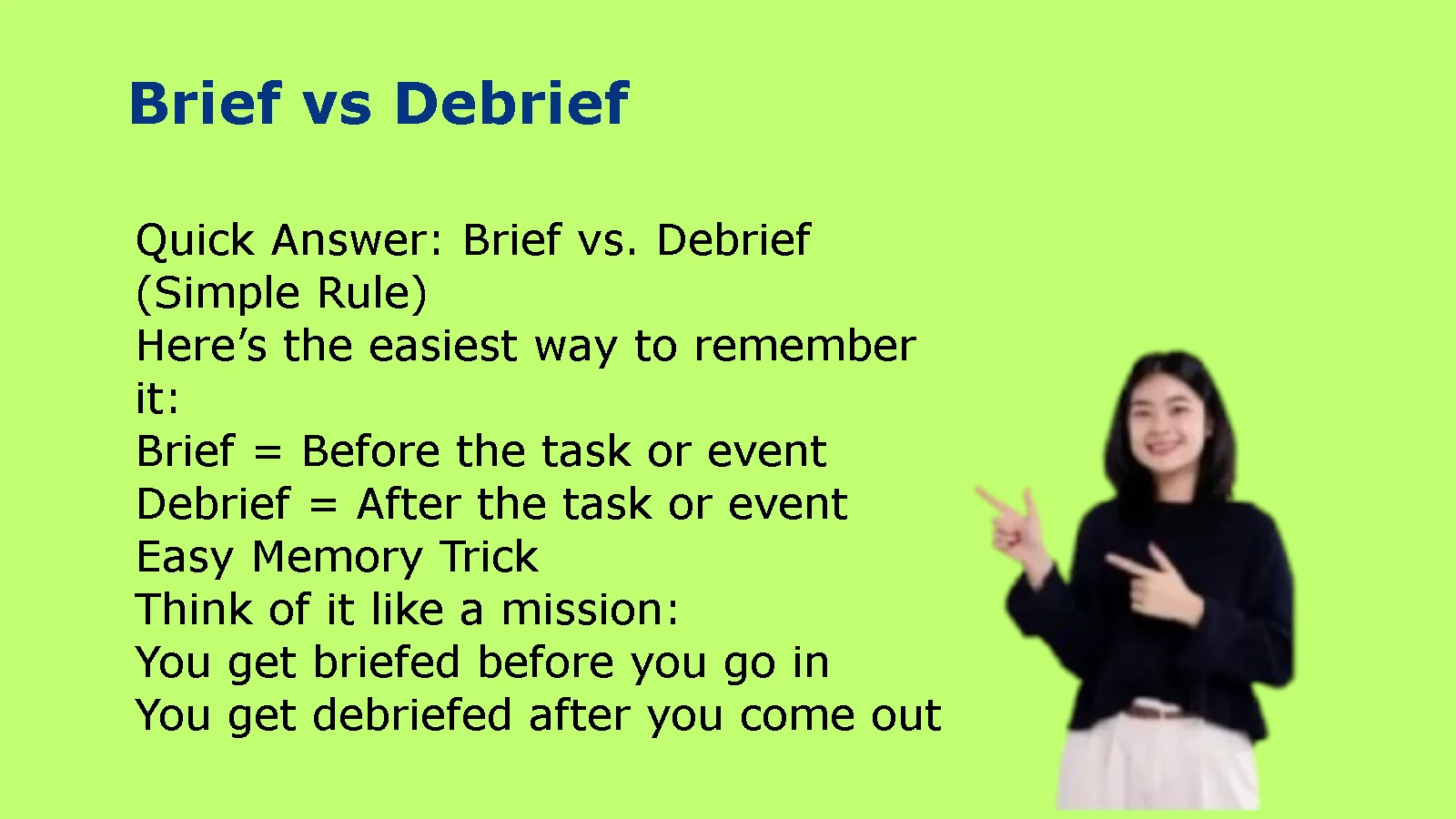
Quick Answer: Brief vs. Debrief (Simple Rule)
Here’s the easiest way to remember it:
- Brief = Before the task or event
- Debrief = After the task or event
Easy Memory Trick
Think of it like a mission:
- You get briefed before you go in
- You get debriefed after you come out
What Does “Brief” Mean?
A brief is information given before action starts.
Core Meaning
It explains:
- What needs to be done
- How it should be done
- What the expectations are
Real-Life Examples
- “The manager will brief the team before the project starts.”
- “We had a safety brief before the flight.”
- “She briefed me on the client requirements.”
Key Idea
A brief is like a game plan before execution.
What Does “Debrief” Mean?
A debrief happens after the action is completed.
Core Meaning
It focuses on:
- What happened
- What went well
- What went wrong
- What can be improved
Real-Life Examples
- “We had a debrief after the event.”
- “The team debriefed after the mission.”
- “Let’s debrief the project results.”
Key Idea
A debrief is like a review session after the game ends.
Brief vs. Debrief: The Core Difference
| Term | When It Happens | Purpose |
| Brief | Before action | Prepare and guide |
| Debrief | After action | Analyze and improve |
Why People Get Confused
Even fluent English speakers mix these up because:
- Both words sound similar
- Both are used in professional settings
- Context often isn’t clearly stated
- People assume timing instead of checking meaning
The real issue isn’t vocabulary—it’s timing confusion.
“Brief” in Workplace Communication
In offices and teams, a brief is very common.
Common Uses
- Project brief
- Client brief
- Design brief
Example Scenario
A manager says:
“Here’s your brief for the campaign.”
That means:
👉 You are being told what to do before starting work
“Debrief” in Workplace Communication
A debrief is equally important after work is done.
Common Uses
- Project debrief
- Event debrief
- Training debrief
Example Scenario
After a product launch:
“Let’s debrief what happened today.”
That means:
👉 Review performance and outcomes
Military and Aviation Usage (Where It Comes From)
These words are heavily used in structured environments:
- Military missions
- Pilot training
- Emergency response teams
Pattern
- Briefing → plan the mission
- Action → execute the mission
- Debriefing → analyze results
This is where the strict before/after meaning comes from.
Real-Life Workplace Example
Scenario: Marketing Campaign
- Brief: Goals, audience, deadlines are explained
- Action: Team runs the campaign
- Debrief: Results and performance are reviewed
Outcome
Without a brief → confusion before starting
Without a debrief → no learning after finishing
Common Mistakes People Make
1. Using “debrief” before work starts
Incorrect:
“We will debrief the team before the project.”
2. Using “brief” after completion
Incorrect:
“Let’s brief what happened yesterday.”
3. Mixing both in informal talk
Leads to unclear communication and misunderstandings
Simple Memory Trick That Always Works
Use this:
👉 Brief = Before (B = Before)
👉 Debrief = Done (after completion)
Or even simpler:
- Brief = Build plan
- Debrief = Break down results
When to Use Each Term
Use “Brief” When:
- Starting a task
- Assigning work
- Explaining instructions
Use “Debrief” When:
- Finishing a task
- Reviewing results
- Learning from outcomes
Final Takeaway: The One Rule That Never Fails
If you remember only one thing, keep this:
👉 Brief prepares you. Debrief reviews you.
One happens before action, the other happens after action.
So the next time you hear these words in meetings, training, or conversations, you’ll instantly know where they belong in the timeline.
Because in real communication, clarity beats similarity—and understanding brief vs. debrief is all about knowing when things happen, not just what they sound like.