Haemorrhage or hemorrhage? Both spellings are correct. Haemorrhage is the standard British English spelling, while hemorrhage is the standard American English spelling. Both words have the same meaning: bleeding, especially when blood escapes from damaged blood vessels inside or outside the body.
The difference comes down to regional spelling conventions, not medical meaning. However, understanding the term also helps you recognize related expressions such as internal hemorrhage, brain hemorrhage, hemorrhagic stroke, and hemorrhagic fever. These terms describe different medical situations, and some require immediate emergency treatment.
This guide explains the difference between haemorrhage and hemorrhage, their pronunciation, common examples, types of bleeding, causes, symptoms, and treatment. You’ll also learn how to use the correct spelling in academic writing, medical documents, and everyday communication.
Haemorrhage or Hemorrhage: What’s the Difference?
Haemorrhage and hemorrhage are two regional spellings of the same word. British English uses haemorrhage, while American English uses hemorrhage. Neither spelling is incorrect. Choose the version that matches your audience, and use it consistently throughout your writing.
| Feature | Haemorrhage | Hemorrhage |
| English variety | British English | American English |
| Meaning | Bleeding, often severe or abnormal | Bleeding, often severe or abnormal |
| Pronunciation | Generally the same | Generally the same |
| Medical adjective | Haemorrhagic | Hemorrhagic |
| Common regional use | UK, Australia, and many other Commonwealth contexts | United States |
| Example | The patient suffered a severe haemorrhage. | The patient suffered a severe hemorrhage. |
The distinction is similar to other British and American spelling differences, such as colour and color, centre and center, or haemoglobin and hemoglobin.
The spelling changes, but the underlying meaning stays the same.
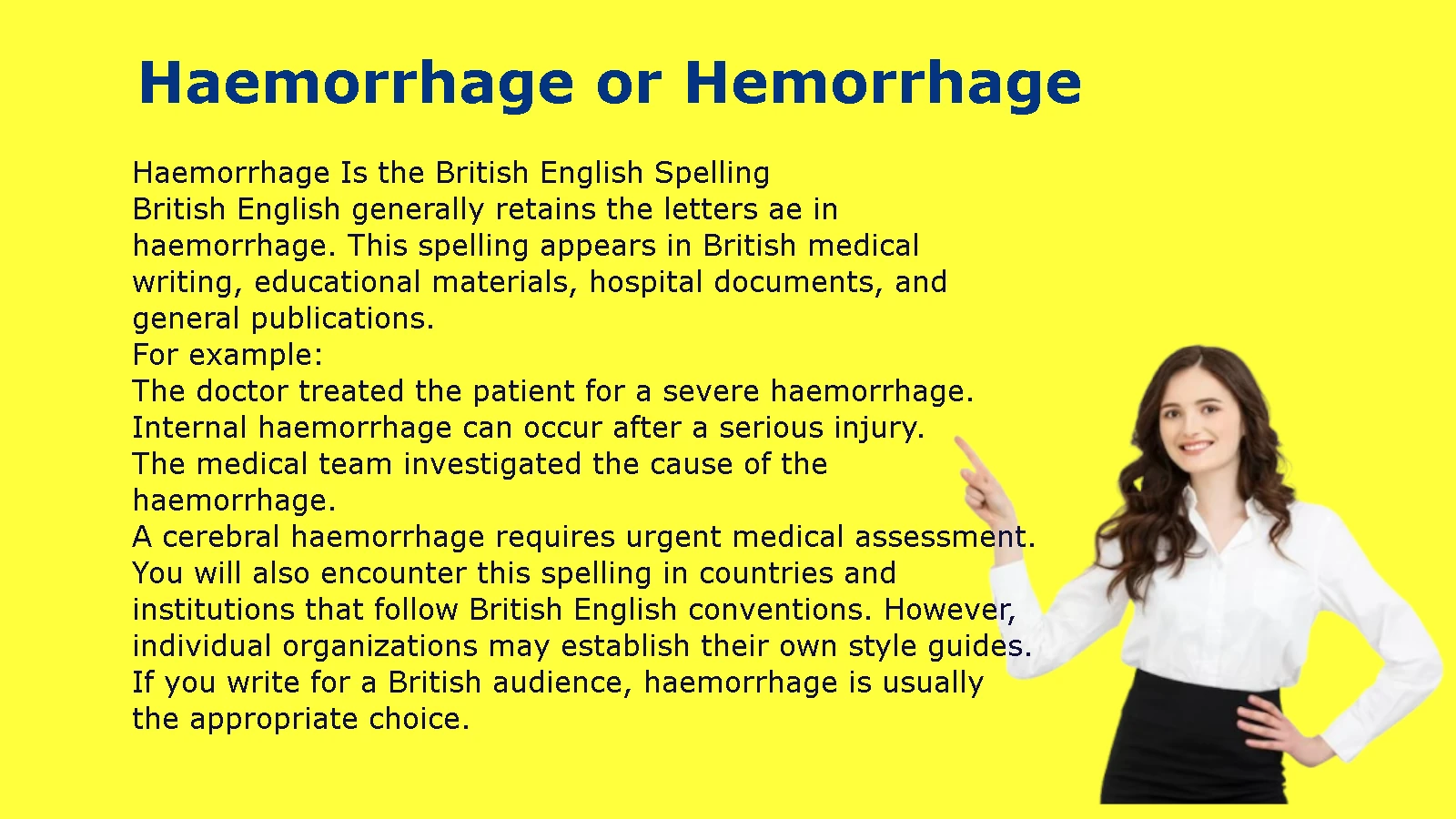
Haemorrhage Is the British English Spelling
British English generally retains the letters ae in haemorrhage. This spelling appears in British medical writing, educational materials, hospital documents, and general publications.
For example:
- The doctor treated the patient for a severe haemorrhage.
- Internal haemorrhage can occur after a serious injury.
- The medical team investigated the cause of the haemorrhage.
- A cerebral haemorrhage requires urgent medical assessment.
You will also encounter this spelling in countries and institutions that follow British English conventions. However, individual organizations may establish their own style guides.
If you write for a British audience, haemorrhage is usually the appropriate choice.
Hemorrhage Is the American English Spelling
American English generally simplifies the spelling by removing the a from haemorrhage. The resulting word, hemorrhage, has exactly the same meaning.
Examples include:
- The patient experienced a serious hemorrhage after the accident.
- Doctors checked for signs of internal hemorrhage.
- A brain hemorrhage can cause sudden neurological symptoms.
- The surgeon worked to control the hemorrhage during the operation.
American medical publications and healthcare institutions commonly use hemorrhage. Writers targeting US readers should generally follow this spelling.
Do Haemorrhage and Hemorrhage Mean the Same Thing?
Yes. Both words describe bleeding caused by blood escaping from blood vessels. The bleeding may occur outside the body, beneath the skin, or inside an organ or body cavity.
For example, a cut that causes heavy bleeding may produce an external haemorrhage. Bleeding inside the skull is an intracranial haemorrhage. The spelling does not determine the location, cause, or severity of the bleeding.
The medical context determines what kind of haemorrhage someone has and how doctors should treat it.
Haemorrhage vs. Hemorrhage Examples in Sentences
The following examples show how both spellings work in ordinary and medical writing.
| British English | American English |
| The patient developed a haemorrhage. | The patient developed a hemorrhage. |
| The doctor suspected internal haemorrhage. | The doctor suspected internal hemorrhage. |
| A cerebral haemorrhage caused the symptoms. | A cerebral hemorrhage caused the symptoms. |
| The team treated the haemorrhagic condition. | The team treated the hemorrhagic condition. |
| The report described postpartum haemorrhage. | The report described postpartum hemorrhage. |
Writing tip: Avoid switching between the two spelling systems in the same article unless you are discussing their differences. Consistency makes your writing easier to read and more professional.
Haemorrhage vs. Hemorrhage: British and American Usage
The choice between haemorrhage and hemorrhage depends mainly on your intended audience. Writers should consider the spelling conventions used by their readers, employer, educational institution, or publication.
When to Use Haemorrhage in UK English
Use haemorrhage when writing in British English, particularly for UK readers.
You may use this spelling in:
- British school and university assignments.
- UK healthcare information.
- Medical articles aimed at British readers.
- Reports that follow a British English style guide.
- Publications serving audiences that traditionally use British spelling.
For instance, a UK-focused article might use the heading “Causes and Symptoms of a Haemorrhage.”
Related British spellings include:
- Haemorrhagic — relating to a haemorrhage.
- Haemoglobin — the oxygen-carrying protein in red blood cells.
- Anaemia — a condition involving reduced hemoglobin or red blood cell capacity, depending on the diagnostic criteria.
These words follow broader British spelling conventions, although not every word containing ae follows an identical pattern.
When to Use Hemorrhage in US English
Use hemorrhage when writing for an American audience.
Common settings include:
- US healthcare websites.
- American medical and nursing assignments.
- US-focused health education articles.
- Reports that follow American English conventions.
- General content written for American readers.
For example, an American article might use the heading “Symptoms and Treatment of a Hemorrhage.”
Related American spellings include:
- Hemorrhagic — relating to a hemorrhage.
- Hemoglobin — the oxygen-carrying protein in red blood cells.
- Anemia — the American spelling of anaemia.
The best approach is to choose your spelling convention before drafting the article. That decision also helps you handle related terms consistently.
Related Spelling Differences: Haemorrhagic vs. Hemorrhagic
Haemorrhagic is the British English adjective, while hemorrhagic is the American English form. Both mean relating to bleeding or a haemorrhage.
Consider these examples:
- British English: The patient experienced a haemorrhagic stroke.
- American English: The patient experienced a hemorrhagic stroke.
The same principle applies to other medical terms.
| British English | American English |
| Haemorrhage | Hemorrhage |
| Haemorrhagic | Hemorrhagic |
| Haemoglobin | Hemoglobin |
| Anaemia | Anemia |
| Oedema | Edema |
These spelling differences do not necessarily indicate differences in diagnosis or treatment.
Which Spelling Should You Use in Medical Writing?
Follow the spelling convention required by your institution or publication. If no rule exists, match the spelling to your intended audience.
For international medical content, consistency matters more than choosing one regional form over the other. Define unfamiliar terms when necessary, especially when writing for readers without a medical background.
For example, a medical glossary can explain both forms in its opening definition: “Haemorrhage (US: hemorrhage) means bleeding caused by the escape of blood from blood vessels.”
After that, use one form consistently.
How to Pronounce Haemorrhage
The pronunciation of haemorrhage and hemorrhage is generally the same. Both are commonly pronounced with three syllables, with the main stress on the first syllable.
A simple pronunciation guide is HEM-uh-rij. The middle vowel is unstressed, and the final syllable sounds similar to the ending in carriage.
Haemorrhage Pronunciation in British English
In British English, haemorrhage is commonly pronounced /ˈhɛmərɪdʒ/.
Break the word into three parts:
- HEM — the stressed first syllable.
- uh — the short, unstressed middle syllable.
- rij — the final syllable.
The letters ae do not require a separate syllable. They form part of the same opening sound.
Hemorrhage Pronunciation in American English
American English commonly uses a similar pronunciation, /ˈhɛmərɪdʒ/. Regional accents may affect the exact vowel sounds, but the syllable structure and main stress remain similar.
The American spelling removes the letter a, yet the spoken word does not change substantially.
How to Remember the Spelling and Pronunciation
Use the following memory trick:
- British English: haemorrhage retains the ae.
- American English: hemorrhage uses a single e after the initial h.
You can also connect the spelling to other regional pairs, such as haemoglobin/hemoglobin and anaemia/anemia.
Remember that spelling rules help you write the word correctly. Pronunciation practice helps you say it clearly. Neither determines how serious a medical condition is.
What Does Hemorrhage Mean in Medical Terms?
In medicine, a hemorrhage is bleeding that occurs when blood escapes from blood vessels. It may follow an injury, occur during surgery, or develop because of a medical condition that damages blood vessels or interferes with normal clotting.
The term covers a broad range of situations. A small amount of bleeding beneath the skin differs significantly from uncontrolled bleeding inside the skull or chest.
What Happens During a Hemorrhage?
Blood normally remains within the circulatory system, moving through arteries, veins, and smaller blood vessels. When a vessel breaks or leaks, blood escapes into surrounding tissue, a body cavity, or the external environment.
The body attempts to stop the bleeding through hemostasis, a process involving blood vessels, platelets, and clotting proteins.
A small injury may stop bleeding naturally. A large or persistent injury can overwhelm these protective mechanisms and lead to substantial blood loss.
The effects depend on several factors:
- Location: Bleeding in the brain can damage sensitive tissue, even when the volume is relatively small.
- Amount: Heavy bleeding can reduce the amount of blood circulating through the body.
- Speed: Rapid blood loss can cause shock before obvious external signs appear.
- Underlying health: Clotting disorders and certain medications may make bleeding harder to control.
This is why doctors assess both the source of bleeding and its effect on the patient’s condition.
Hemorrhage vs. Bleeding: Is There a Difference?
Bleeding is the general term for blood leaving blood vessels. A hemorrhage usually refers to bleeding that is clinically significant, abnormal, or occurring in a specific internal location.
However, the words can overlap. Medical professionals may use hemorrhage to describe different amounts of bleeding depending on the location and clinical context.
| Term | Meaning | Example |
| Bleeding | General term for blood escaping vessels | Blood from a small cut |
| Hemorrhage | Bleeding that may be substantial or medically significant | Severe blood loss after trauma |
| Internal hemorrhage | Bleeding inside the body | Blood collecting in the abdomen |
| Intracranial hemorrhage | Bleeding inside the skull | Bleeding following a head injury |
The terms describe related concepts, not completely separate processes.
What Makes a Hemorrhage Serious?
A hemorrhage becomes dangerous when bleeding threatens the function of an organ or prevents the circulatory system from supplying enough oxygen to the body.
For example, uncontrolled bleeding from a major artery can cause rapid blood loss. A brain hemorrhage may compress nearby tissue and increase pressure inside the skull. Gastrointestinal bleeding can also become dangerous if blood loss is heavy or continues unnoticed.
Warning signs can include:
- Heavy or persistent bleeding.
- Fainting or severe dizziness.
- Confusion or unusual drowsiness.
- Pale, cold, or clammy skin.
- Rapid breathing or a racing heartbeat.
- Sudden severe headache or new neurological symptoms.
Suspected severe hemorrhage is a medical emergency. Contact local emergency services rather than waiting for symptoms to worsen.
What Are the Main Types of Hemorrhage?
Doctors classify hemorrhages according to their location, source, and severity. External bleeding occurs outside the body, while internal bleeding occurs within tissues, organs, or body cavities. Some types receive specific names because their location creates distinctive risks.
External Hemorrhage
An external hemorrhage occurs when blood escapes through a break in the skin or another visible opening.
Common causes include cuts, puncture wounds, accidents, and serious injuries. The amount of bleeding depends on the affected vessel, the depth of the injury, and the body’s ability to form a clot.
For minor cuts, direct pressure often controls bleeding. Severe bleeding may require emergency medical care.
What to do: Apply firm, continuous pressure to the wound with clean gauze or cloth. If blood soaks through, add more material without removing the original layer. For life-threatening bleeding from an arm or leg, use a commercially made tourniquet if available and you know how to use it, or follow emergency dispatcher’s instructions.
Do not delay emergency assistance to try multiple home remedies.
Internal Hemorrhage
An internal hemorrhage occurs when blood escapes into tissues or body cavities without necessarily leaving the body.
It can follow a fall, vehicle collision, blunt-force injury, surgery, or a medical condition affecting blood vessels or clotting.
Internal bleeding is especially dangerous because the person may not see the blood. Symptoms can develop gradually or appear suddenly, depending on the location and severity.
Possible warning signs include:
- Abdominal pain or swelling.
- Deep bruising.
- Weakness or dizziness.
- Fainting.
- Shortness of breath.
- Confusion or reduced alertness.
If you suspect internal bleeding after a significant injury, seek emergency care even if there is no visible wound.
Intracranial Hemorrhage
An intracranial hemorrhage is bleeding inside the skull. It may occur within the brain tissue or in spaces surrounding the brain.
Causes include head trauma, high blood pressure, ruptured aneurysms, and abnormalities in blood vessels. The exact effects depend on the bleeding location and amount.
Symptoms may include a sudden severe headache, vomiting, confusion, weakness on one side of the body, seizures, or loss of consciousness.
Intracranial hemorrhage requires urgent medical evaluation. A person can have a serious brain injury without an obvious external wound.
Gastrointestinal Hemorrhage
A gastrointestinal hemorrhage is bleeding somewhere in the digestive tract, which extends from the esophagus to the rectum.
Possible causes include peptic ulcers, inflammation, enlarged veins in the esophagus, diverticular disease, and other digestive conditions.
Symptoms depend on the location and speed of bleeding.
- Vomiting blood: Blood may appear bright red or resemble dark coffee grounds.
- Black, tarry stools: These can indicate bleeding higher in the digestive tract.
- Red or maroon stools: These may indicate lower gastrointestinal bleeding, although other causes are possible.
- Weakness or dizziness: These can develop when bleeding causes significant blood loss.
Seek urgent medical assessment for suspected gastrointestinal bleeding. Vomiting blood, black tarry stools accompanied by weakness, or heavy rectal bleeding may require emergency care.
Other Types of Hemorrhage by Location and Severity
Doctors use additional terms to identify the location or circumstances of bleeding.
| Type | Location or context | Why it matters |
| Cerebral hemorrhage | Bleeding within brain tissue | Can damage brain cells and increase pressure |
| Subarachnoid hemorrhage | Bleeding into the space around the brain | May cause a sudden, severe headache |
| Subdural hemorrhage | Bleeding beneath the dura, a protective membrane around the brain | Can develop after head trauma |
| Retinal hemorrhage | Bleeding within the retina | May affect vision and require investigation |
| Pulmonary hemorrhage | Bleeding from the lungs or respiratory tract | Can interfere with breathing |
| Postpartum hemorrhage | Excessive bleeding after childbirth | Can become life-threatening without prompt treatment |
These labels help clinicians communicate the location of the problem. They do not replace an individual medical assessment.
What Causes a Hemorrhage?
A hemorrhage can develop when a blood vessel breaks, a medical condition weakens vessel walls, or the blood cannot clot effectively. The underlying cause influences the treatment, so clinicians investigate both the bleeding site and any contributing health problems.
Injuries and Trauma
Physical injuries are a common cause of bleeding. A sharp object can cut a blood vessel, while a hard impact can damage tissues or organs without breaking the skin.
Examples include:
- Deep cuts and puncture wounds.
- Falls and road traffic collisions.
- Sports injuries.
- Fractures that damage nearby blood vessels.
- Head injuries that cause bleeding inside the skull.
The visible wound does not always reveal the full extent of the damage. Someone who experiences a strong impact to the abdomen or chest may have internal bleeding despite having no open wound.
Surgical Complications
Surgery involves working with tissues and blood vessels, so bleeding can occur during or after a procedure.
Surgeons use techniques such as cauterization, sutures, clips, and other methods to control bleeding. After surgery, medical teams monitor patients for signs of continued blood loss.
Persistent bleeding may result from a damaged vessel, an issue with clot formation, or a complication involving the surgical site.
Sudden swelling, increasing pain, faintness, or unexpected bleeding after surgery warrants prompt medical assessment.
Medical Conditions That Can Cause Bleeding
Several health conditions increase the likelihood of hemorrhage.
Blood vessel disorders: Aneurysms and certain vascular malformations can increase the risk of bleeding if a vessel ruptures.
Clotting disorders: Hemophilia and some other conditions interfere with normal clot formation.
Liver disease: Severe liver dysfunction can affect the production of proteins needed for blood clotting.
High blood pressure: Long-standing hypertension can damage blood vessels and contributes to the risk of certain brain hemorrhages.
Gastrointestinal disease: Ulcers and other digestive conditions can damage tissue and cause internal bleeding.
The same symptom can have different causes, so a clinician may need blood tests, imaging, endoscopy, or other investigations to identify the source.
Medications That Increase Bleeding Risk
Some medicines affect clotting or platelet function. These include anticoagulants, such as warfarin and certain direct oral anticoagulants, as well as antiplatelet medicines such as aspirin and clopidogrel.
These medicines can be essential for preventing strokes and other serious complications. However, they may increase bleeding risk, especially when combined with certain other drugs or used by someone with additional risk factors.
Do not stop a prescribed blood thinner on your own. Contact your healthcare professional if you notice unusual bruising, prolonged bleeding, blood in your urine, black stools, or other concerning symptoms.
What Are the Symptoms of a Hemorrhage?
Hemorrhage symptoms depend on where bleeding occurs, how quickly blood escapes, and how much blood the person loses. External bleeding may be obvious, but internal bleeding can cause pain, weakness, dizziness, or changes in consciousness before anyone identifies the source.
Signs of External Bleeding
External bleeding is usually visible, although the amount can be difficult to judge.
Possible signs include:
- Blood flowing continuously from a wound.
- Blood spurting from an injury.
- A wound that does not stop bleeding with firm pressure.
- Rapidly soaking dressings.
- Increasing swelling around an injury.
Bleeding that spurts or continues heavily can indicate damage to a major blood vessel. Treat severe bleeding as an emergency.
Symptoms of Internal Bleeding
Internal bleeding may cause symptoms that resemble other medical conditions.
Common warning signs include:
- Pain or tenderness in the abdomen or chest.
- Swelling or expanding bruises.
- Dizziness, weakness, or fainting.
- Rapid heartbeat.
- Pale or clammy skin.
- Shortness of breath.
- Confusion or unusual sleepiness.
A person may not experience every symptom. Some internal hemorrhages initially produce subtle signs, particularly when the bleeding develops slowly.
After a major accident or significant impact, do not assume that the absence of visible blood means the person is safe.
Warning Signs of a Brain Hemorrhage
A brain hemorrhage can cause sudden neurological changes because blood damages or compresses sensitive brain tissue.
Possible symptoms include:
- A sudden, severe headache.
- Weakness or numbness on one side of the body.
- Difficulty speaking or understanding speech.
- Sudden vision problems.
- Loss of balance or coordination.
- Seizures.
- Vomiting, confusion, or loss of consciousness.
These symptoms can overlap with those of other emergencies, including ischemic stroke. You cannot reliably distinguish the cause at home.
Call emergency services immediately if someone develops sudden neurological symptoms. Note the time symptoms began, if known, because this information can help guide treatment.
When to Seek Emergency Medical Care
Seek immediate medical help if someone has uncontrolled bleeding, suspected internal bleeding after significant trauma, signs of shock, or sudden symptoms suggesting a brain hemorrhage.
While waiting for emergency assistance:
- Apply firm pressure to an external bleeding wound.
- Keep the injured person still and warm.
- Do not give food or drink to someone who may need emergency surgery.
- Do not remove deeply embedded objects from a wound.
- Follow the emergency dispatcher’s instructions.
For severe bleeding from a limb, a suitable tourniquet may be necessary when available and used correctly. Do not loosen or remove an applied tourniquet while waiting for professional help unless emergency personnel direct you to do so.
How Is a Hemorrhage Treated?
Hemorrhage treatment focuses on stopping the bleeding, maintaining circulation, and treating the underlying cause. Doctors choose the approach according to the bleeding location, severity, and the patient’s overall condition.
There is no single treatment that works for every hemorrhage.
First Aid for External Bleeding
For most external bleeding, the first priority is to control the blood loss.
Follow these steps:
- Apply direct pressure: Press firmly on the wound using clean gauze or cloth.
- Maintain pressure: Keep pressing continuously rather than repeatedly lifting the dressing to check the wound.
- Add more dressings if needed: Place additional material over soaked dressings.
- Seek help for severe bleeding: Contact emergency services when bleeding is heavy, persistent, or potentially life-threatening.
- Use a tourniquet when indicated: For life-threatening bleeding from an arm or leg, use a commercial tourniquet if available and follow its instructions or emergency guidance.
For minor cuts, cleaning and covering the wound may be sufficient once bleeding stops. Deep wounds, animal or human bites, and injuries involving possible damage to nerves, tendons, or blood vessels require medical assessment.
Emergency Treatment for Severe Hemorrhage
Severe hemorrhage can cause hemorrhagic shock, a dangerous condition in which blood loss prevents the body from delivering enough oxygen to its organs.
Emergency teams may:
- Control external bleeding.
- Establish intravenous or intraosseous access.
- Give blood products when indicated.
- Monitor blood pressure, heart rate, oxygen levels, and laboratory results.
- Identify the source of bleeding.
- Arrange emergency surgery or an interventional procedure.
Treatment depends on the situation. For example, someone with severe traumatic bleeding may need blood transfusion and urgent surgical control, while someone with gastrointestinal bleeding may require endoscopy.
Medical Procedures and Surgery
Doctors may use different procedures to stop bleeding.
Surgery: Surgeons can repair damaged vessels, remove damaged tissue, or control bleeding at the source.
Endoscopy: A flexible camera allows doctors to examine the digestive tract and sometimes treat bleeding ulcers or vessels.
Embolization: An interventional radiologist can block a bleeding blood vessel using specialized materials delivered through a catheter.
Medication: Depending on the cause, clinicians may use medicines that support clotting or reverse the effects of certain anticoagulants.
Not every hemorrhage requires surgery. The correct treatment depends on the bleeding site, its severity, and the person’s medical condition.
Treatment for Internal and Brain Hemorrhages
Internal hemorrhage requires treatment directed at the bleeding source and any resulting complications.
For a brain hemorrhage, doctors may order a CT scan or other imaging to identify the location and extent of bleeding. Treatment may include careful blood pressure management, reversal of anticoagulant effects when appropriate, management of pressure inside the skull, and neurosurgery in selected cases.
A patient with a small, stable hemorrhage may need close monitoring rather than an immediate operation. A larger hemorrhage that compresses brain tissue may require urgent intervention.
The treatment plan depends on the precise diagnosis. Never assume that all brain hemorrhages receive the same treatment.
Recovery and Follow-Up Care
Recovery depends on the cause, amount of blood lost, organs affected, and speed of treatment.
Someone recovering from a minor external bleed may need little more than wound care. A person who experiences a major hemorrhage may need hospitalization, rehabilitation, repeat imaging, or treatment for anemia.
Follow-up care may include:
- Monitoring blood counts.
- Reviewing medicines that affect clotting.
- Treating the underlying disease.
- Watching for recurrent bleeding.
- Receiving physical, occupational, or speech therapy after a brain injury.
Ask your healthcare professional which symptoms require urgent reassessment and when you can safely return to normal activities.
What Is a Brain Hemorrhage?
A brain hemorrhage is bleeding in or around the brain. The bleeding can injure brain cells, interrupt normal brain function, and increase pressure inside the skull.
The term covers several conditions, including bleeding within brain tissue and bleeding in the spaces around it. The exact diagnosis depends on where the blood collects.
Common Causes of Brain Hemorrhage
Brain hemorrhage can result from several conditions.
- High blood pressure: Chronic hypertension can weaken small blood vessels and increase the risk of bleeding within the brain.
- Head trauma: A fall, collision, or other impact can damage vessels inside the skull.
- Aneurysm rupture: A weakened area of an artery may rupture and cause bleeding around the brain.
- Vascular malformations: Abnormal connections between blood vessels can increase the risk of hemorrhage.
- Blood-thinning medication: Anticoagulants can increase bleeding risk, particularly in someone who sustains a head injury.
The cause influences both immediate treatment and long-term prevention.
Symptoms of a Brain Hemorrhage
Symptoms may begin suddenly or develop over time, depending on the location and severity of the bleeding.
A person may experience a severe headache, weakness, speech problems, confusion, vomiting, seizures, or reduced consciousness.
Some brain hemorrhages initially cause relatively mild symptoms. That does not mean they are harmless.
If symptoms develop after a head injury, especially in someone taking anticoagulants, urgent medical assessment is important.
How Doctors Diagnose and Treat It
Doctors evaluate the person’s symptoms, medical history, neurological function, and vital signs. A CT scan is often used to detect acute bleeding quickly. Additional tests may help identify an aneurysm, vascular malformation, or other cause.
Treatment may involve blood pressure management, reversal of certain anticoagulants, intensive monitoring, or surgery. Rehabilitation may help people regain abilities affected by the hemorrhage.
Early diagnosis can make a major difference, so sudden neurological symptoms should never be ignored.
What Is a Hemorrhagic Stroke?
A hemorrhagic stroke occurs when a blood vessel ruptures and causes bleeding in or around the brain. The escaped blood damages brain tissue and may increase pressure inside the skull.
It differs from an ischemic stroke, which occurs when a blood clot or another obstruction blocks blood flow to part of the brain.
Hemorrhagic Stroke vs. Ischemic Stroke
Both types of stroke can cause sudden neurological symptoms, but their underlying mechanisms differ.
| Feature | Hemorrhagic stroke | Ischemic stroke |
| Main cause | Bleeding from a ruptured blood vessel | Blocked blood flow to the brain |
| Common mechanisms | Vessel rupture, aneurysm, or vascular abnormality | Blood clot or narrowed artery |
| Brain injury | Blood damages tissue and may increase pressure | Reduced oxygen supply damages tissue |
| Diagnosis | Brain imaging identifies bleeding | Brain imaging identifies or supports diagnosis of blocked blood flow |
| Treatment | Control bleeding and manage its effects | Restore blood flow when appropriate and prevent further clots |
The distinction matters because treatments differ. Some clot-dissolving medicines used for ischemic stroke can be dangerous in hemorrhagic stroke.
Never attempt to diagnose the type of stroke at home. Emergency brain imaging helps clinicians choose appropriate treatment.
Common Symptoms and Risk Factors
Hemorrhagic stroke may cause sudden weakness, facial drooping, difficulty speaking, loss of coordination, severe headache, vomiting, or reduced consciousness.
Risk factors vary by the underlying cause. High blood pressure is an important risk factor for many intracerebral hemorrhages. Aneurysms and vascular malformations can also lead to bleeding, while head trauma can cause traumatic intracranial hemorrhage.
Some risk factors can be managed through medical care. Controlling blood pressure, following prescribed treatment, and reviewing medication risks with a clinician may help reduce the likelihood of certain types of hemorrhage.
Why Immediate Treatment Matters
Brain tissue is sensitive to injury, and a hemorrhage can worsen as bleeding continues or pressure rises.
Emergency treatment aims to limit further damage, control the source of bleeding when possible, and manage complications. Depending on the condition, the team may use medication, intensive monitoring, surgery, or other procedures.
Recovery can range from substantial improvement to long-term disability. Rehabilitation may address movement, communication, memory, and everyday activities.
Call emergency services immediately if someone develops sudden weakness, difficulty speaking, a severe unusual headache, or a sudden loss of balance or consciousness.
What Is Hemorrhagic Fever?
Hemorrhagic fever is a term used for certain infectious diseases that can cause fever and, in severe cases, bleeding and damage to blood vessels or multiple organs. The term does not describe a single disease.
Some viral hemorrhagic fevers can cause severe illness and require specialized medical care. However, not every infected person develops visible bleeding, and fever with bleeding can have other causes.
Causes and Types of Hemorrhagic Fever
Viral hemorrhagic fevers are caused by several groups of viruses. Examples include Ebola virus disease, Marburg virus disease, Lassa fever, and certain severe dengue infections.
Transmission routes differ by disease. Some infections spread through contact with infected animals or their bodily fluids, while others may spread through contact with infected people and contaminated materials. Certain viruses are transmitted by mosquitoes or ticks.
These diseases do not all spread in the same way. Risk assessment depends on the specific infection, geographic exposure, and contact history.
Common Symptoms
Symptoms vary by disease but may include:
- Fever.
- Severe weakness or fatigue.
- Muscle aches.
- Headache.
- Abdominal pain.
- Vomiting or diarrhea.
- Bleeding in severe cases.
Early symptoms can resemble other infections. Visible bleeding is not necessary for a serious viral hemorrhagic fever to be present.
Anyone with a compatible illness and a relevant exposure history should seek urgent medical advice and explain the exposure before arriving at a healthcare facility. This helps clinicians arrange appropriate precautions.
How It Differs From Other Types of Hemorrhage
The key difference is that hemorrhage describes bleeding, while hemorrhagic fever describes a group of infectious diseases that may involve bleeding among other symptoms.
| Term | What it describes |
| Hemorrhage | Bleeding from blood vessels |
| Brain hemorrhage | Bleeding in or around the brain |
| Hemorrhagic stroke | Stroke caused by bleeding in or around the brain |
| Hemorrhagic fever | An infectious disease category that can involve fever, vascular damage, and sometimes bleeding |
A person can have a hemorrhage without having an infection. Likewise, a person with a hemorrhagic fever may not develop obvious bleeding.
Keeping these distinctions clear prevents confusion when reading medical information.
Haemorrhage or Hemorrhage: Common Mistakes to Avoid
The most common writing mistake is treating the two spellings as if they refer to different diseases. They do not. The other major mistake is confusing a general bleeding term with a specific medical condition.
Using British and American Spellings Inconsistently
Mixing haemorrhage and hemorrhage in the same article can make the text look inconsistent.
For example, avoid writing: “The patient developed a haemorrhage, and doctors treated the hemorrhage.”
Unless you are comparing regional spelling, choose one version.
A practical editing checklist:
- Identify your target audience.
- Choose British or American English.
- Apply the same convention to related terms.
- Check headings, tables, image captions, and metadata.
- Review the final article for accidental spelling changes.
Consistency is especially useful for educational websites, medical glossaries, and SEO articles targeting a particular country.
Confusing Hemorrhage With Hemorrhagic Stroke
A hemorrhage is a form of bleeding. A hemorrhagic stroke is a specific type of stroke caused by bleeding in or around the brain.
Not every hemorrhage is a stroke. For example, bleeding from a cut on the arm is a hemorrhage but not a stroke. Gastrointestinal bleeding is also a hemorrhage, but it does not become a hemorrhagic stroke simply because it is severe.
Understanding the broader term helps you interpret specific diagnoses correctly.
Choosing the Right Spelling for Your Audience
Use this simple guide when editing your content:
| Your audience | Preferred spelling |
| United Kingdom | Haemorrhage |
| United States | Hemorrhage |
| British English educational publication | Haemorrhage |
| American English medical website | Hemorrhage |
| International publication | Follow the house style and remain consistent |
If you are quoting a document or reproducing an official diagnosis, preserve the spelling used in the original when accuracy requires it.
Frequently Asked Questions
Is Haemorrhage or Hemorrhage Correct?
Both are correct. Haemorrhage is the standard British English spelling, while hemorrhage is the standard American English spelling. Both describe bleeding, particularly bleeding that is abnormal, severe, or medically significant.
What Is the Difference Between Haemorrhage and Hemorrhage?
There is no difference in meaning. The words represent regional spelling conventions. British English retains the letters ae, while American English uses e. Their pronunciation and medical meaning are generally the same.
How Do You Pronounce Haemorrhage?
The word is commonly pronounced HEM-uh-rij, with the main stress on the first syllable. British and American pronunciations are broadly similar, although individual accents can affect the exact vowel sounds.
What Are the Main Types of Hemorrhage?
Major categories include external hemorrhage, internal hemorrhage, intracranial hemorrhage, and gastrointestinal hemorrhage. Doctors may also use terms such as pulmonary hemorrhage, retinal hemorrhage, and postpartum hemorrhage to identify particular locations or circumstances.
What Are the Most Common Causes of Hemorrhage?
Common causes include injuries, surgery, damaged blood vessels, certain medical conditions, and medicines that affect clotting. The specific cause depends on the location of the bleeding and the person’s health history.
Is a Brain Hemorrhage the Same as a Hemorrhagic Stroke?
Not always. A brain hemorrhage means bleeding in or around the brain. A hemorrhagic stroke is a stroke caused by bleeding in or around the brain. Some brain hemorrhages cause a hemorrhagic stroke, but the terms are not interchangeable in every clinical context.
Conclusion: Haemorrhage or Hemorrhage?
Haemorrhage and hemorrhage are both correct spellings of the same word. Use haemorrhage for British English and hemorrhage for American English. The difference is regional spelling, not meaning or pronunciation.
The term describes bleeding that can range from a minor injury to a life-threatening emergency. Related expressions such as internal hemorrhage, brain hemorrhage, hemorrhagic stroke, and hemorrhagic fever refer to different situations, so understanding the context matters.
When writing about the term, choose the spelling that fits your audience and use it consistently. When dealing with real symptoms, remember that severe bleeding, suspected internal hemorrhage, and sudden neurological changes require urgent medical assessment.