Have you ever wondered what itch means and how to use it correctly in a sentence? The word itch is common in everyday English, but its meaning can change slightly depending on whether you use it as a noun or a verb. Understanding these uses can help you recognize the word in conversations, writing, and different contexts.
Itch means an uncomfortable feeling on your skin that makes you want to scratch. As a verb, itch means to have this feeling or to want to scratch a particular part of your body. The word can also have a figurative meaning, especially when you strongly want to do something.
Examples:
- I have an itch on my arm.
- My mosquito bite itches badly.
The confusion is understandable. People often search for itch meaning, itch definition, what does itch mean, or itch meaning in English because the word can describe both a physical sensation and a strong desire to do something. For example, someone might say they “have an itch to travel” when they strongly want to go somewhere.
In this guide, you’ll learn the complete meaning of itch, including its definition, pronunciation, origin, part of speech, and usage. You’ll also discover its noun and verb forms, figurative meaning, common expressions, and clear examples to help you understand how to use itch correctly.
What Does Pining Mean?
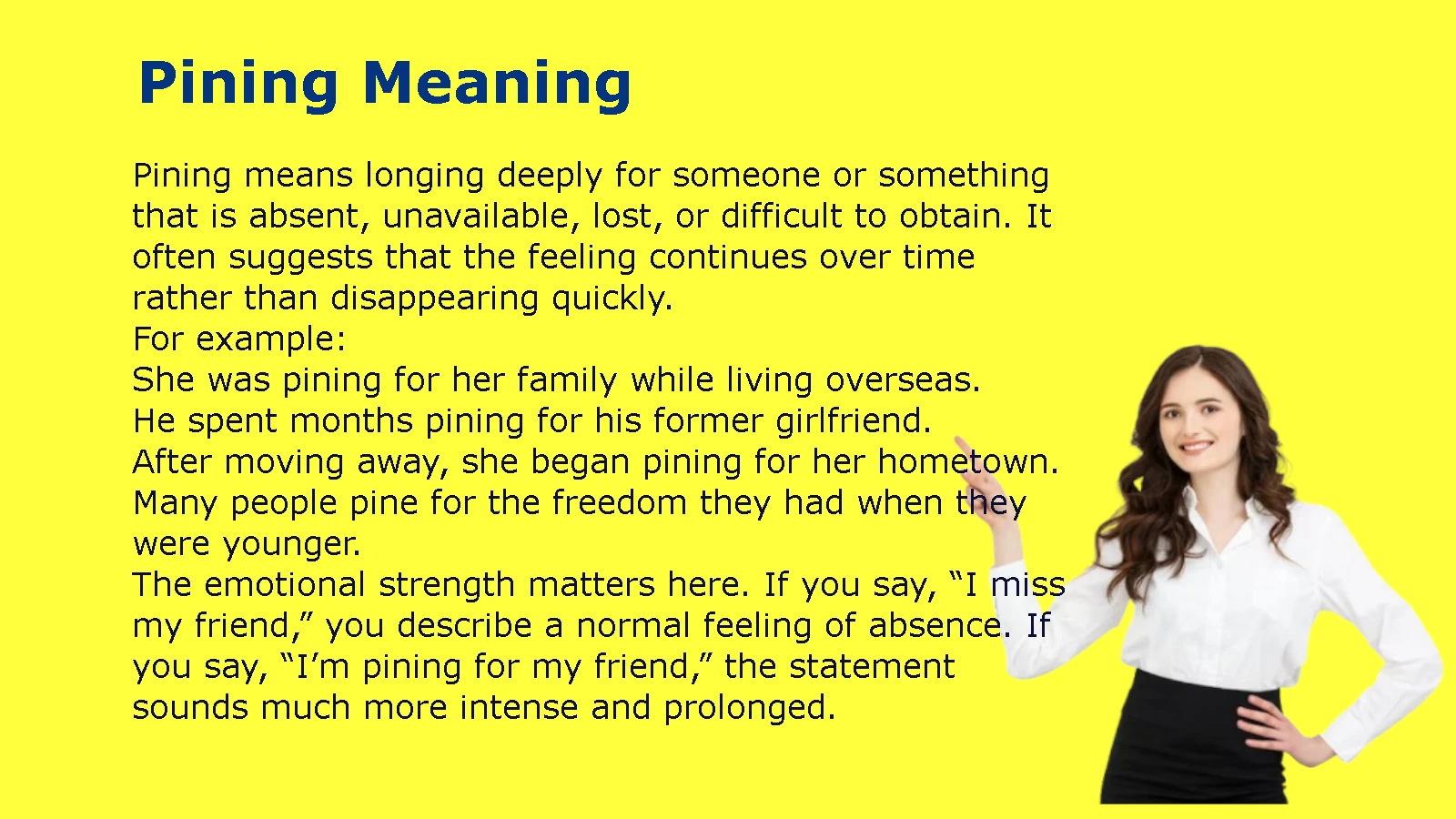
Pining means longing deeply for someone or something that is absent, unavailable, lost, or difficult to obtain. It often suggests that the feeling continues over time rather than disappearing quickly.
For example:
- She was pining for her family while living overseas.
- He spent months pining for his former girlfriend.
- After moving away, she began pining for her hometown.
- Many people pine for the freedom they had when they were younger.
The emotional strength matters here. If you say, “I miss my friend,” you describe a normal feeling of absence. If you say, “I’m pining for my friend,” the statement sounds much more intense and prolonged.
In other words, pining is more than ordinary missing.
It often suggests that the person has become emotionally preoccupied with what they cannot have. The feeling can be romantic, but it doesn’t have to be.
Pining Meaning in Simple Words
In everyday language, pining can mean:
- missing someone deeply
- longing for someone
- yearning for something
- wishing someone were near
- wanting something that feels out of reach
- feeling sad because someone or something is gone
Imagine that your best friend moves to another country. You might miss them at first. If months pass and you still strongly wish they were nearby, you could describe yourself as pining for your friend.
That distinction gives the word its emotional weight.
Pining Definition
Pining is the present participle of the verb pine.
The verb pine is generally intransitive, which means it doesn’t normally take a direct object. Instead, English commonly uses it with prepositions such as for.
The basic pattern is:
pine + for + person or thing
For example:
- She pined for her husband.
- He pined for his old home.
- They were pining for better times.
The word can also appear with away, as in pining away. This construction emphasizes prolonged sadness, longing, or emotional decline.
Oxford lists the verb forms as pine, pines, pined, pined, pining, with pining pronounced /ˈpaɪnɪŋ/. The verb’s historical roots are connected with ideas of suffering and pain, which helps explain its strongly emotional modern sense.
What Does Pining Mean Emotionally?
Emotionally, pining usually combines three ideas:
- Desire — You strongly want someone or something.
- Absence — The person or thing isn’t available to you.
- Persistence — The feeling continues instead of quickly fading.
That combination makes pining different from simple wanting.
You can want a new phone without pining for one. You can miss a friend without pining for them. The word becomes appropriate when the desire carries a deeper emotional ache.
Pining for Someone Meaning
The phrase pining for someone means longing deeply for that person, usually because they’re absent, unavailable, or no longer part of your life.
It often appears in romantic situations.
For example:
After the breakup, he was still pining for his ex.
This means he wasn’t merely thinking about his former partner. He continued to feel a strong emotional desire to be with that person again.
However, pining for someone isn’t automatically romantic.
You can pine for:
- a parent who lives far away
- a childhood friend
- a sibling
- someone who has died
- a former partner
- someone you cannot be with
- a person who has moved away
For example:
- The homesick student was pining for her parents.
- The old dog was pining for its owner.
- He was pining for the friend who had moved overseas.
The context tells you what kind of relationship exists.
Pining for Someone vs. Missing Someone
Missing someone and pining for someone overlap, but they don’t carry exactly the same emotional force.
| Expression | Basic meaning | Emotional strength | Typical implication |
| Missing someone | Feeling their absence | Moderate | You wish they were present |
| Longing for someone | Strong desire to be with them | Strong | You deeply want them |
| Yearning for someone | Intense emotional desire | Strong | The feeling can sound poetic |
| Pining for someone | Deep, often prolonged longing | Very strong | The absence continues to affect you |
Consider these sentences:
- I miss my brother.
- I long for my brother.
- I yearn for my brother.
- I pine for my brother.
All four sentences express some form of emotional absence. Yet pining often creates the strongest sense of lingering sadness.
It can sound especially natural when someone has been separated from another person for a significant period.
Examples of Pining in Sentences
Seeing pining meaning in context makes the word much easier to understand.
Pining for Someone
- She was pining for the man she loved.
- He had been pining for his wife while she was away.
- After the breakup, she spent weeks pining for her former partner.
Family
- The child was pining for his parents.
- After moving abroad, he began pining for his family.
- She was pining for the relatives she rarely saw.
Home
- After three years overseas, he was still pining for home.
- The homesick student was pining for the mountains near her hometown.
- She spent the winter pining for the familiar streets of her old neighborhood.
Pining for the Past
- He was always pining for the good old days.
- She wasn’t happy because she kept pining for her old life.
- Many people spend too much time pining for a past they can’t recreate.
Pining for Something Unavailable
- The fans were pining for a return to the team’s winning years.
- He was pining for a second chance.
- She spent years pining for the opportunity she had once missed.
These examples show that pining doesn’t require a romantic relationship. The object of the longing can be a person, place, opportunity, experience, or period of life.
How to Use Pining in a Sentence
The most common structure is pining for + noun or pronoun.
Pining for + Person or Thing
This is the most useful pattern to remember.
Pattern:
subject + be + pining for + person/thing
Examples:
- I am pining for my family.
- She is pining for her old home.
- He was pining for his former partner.
- They were pining for a return to normal life.
You can also use pine for in other verb forms:
- She pines for her children.
- He pined for his lost opportunity.
- They have been pining for home.
- We had been pining for a break from work.
Pining After Someone
Pining after someone also expresses strong longing for a person.
For example:
- He was pining after his former girlfriend.
- She spent years pining after the man she couldn’t marry.
However, pining for is generally the clearer and more familiar construction for modern everyday English.
If you’re writing a straightforward sentence, pining for someone is usually the safest choice.
Pining Away
The expression pining away emphasizes prolonged emotional suffering or decline.
For example:
- He was pining away after losing the person he loved.
- The dog seemed to pine away after its owner died.
This expression has a more dramatic tone than simply saying someone missed another person.
It can suggest that grief or longing has consumed someone’s attention or affected their well-being.
Is Pining Always Romantic?
No. Pining is often associated with romantic longing, but the word isn’t limited to romance.
Romantic writing uses pining frequently because the word captures the emotional tension of wanting someone who isn’t available. A character may pine for a former lover, an unreachable crush, or someone separated from them by distance.
Still, everyday English uses the word in many other contexts.
Family
She was pining for her children while working abroad.
Friendship
He was pining for his old group of friends.
Home
After moving to another country, she started pining for home.
The Past
He kept pining for his childhood.
Lost Opportunities
She was pining for the chance she never took.
So when you see pining meaning in a sentence, don’t automatically assume that the speaker is talking about romantic love.
Pining Meaning in Different Contexts
The object of the longing changes the shade of meaning.
Pining in Romantic Relationships
Romantic pining usually involves someone who wants a relationship, wants a former partner back, or longs for someone who isn’t available.
For example:
He spent months pining for her after the relationship ended.
The sentence suggests emotional persistence. He hasn’t simply remembered her once or twice. His feelings continue to occupy his mind.
Pining for Family
Family separation can also produce pining.
The child was pining for his mother while staying with relatives.
Here, the word emphasizes emotional distress caused by separation rather than romantic desire.
Pining for Home
People can pine for familiar places after moving away.
She was pining for the quiet village where she grew up.
This use is closely related to homesickness, although the words aren’t identical. Homesickness specifically describes distress caused by being away from home. Pining focuses more broadly on the intense longing itself.
Pining for the Past
People can also pine for a previous period of life.
He was constantly pining for his college days.
This doesn’t mean he literally wants to return to the past. Instead, he deeply wishes he could experience that period again.
Pining for Something Unattainable
Sometimes the object of pining isn’t lost. It may simply be difficult or impossible to obtain.
She was pining for a life she knew she couldn’t have.
That sense of unattainability is important. Pining often involves a gap between what someone wants and what reality allows.
Pining Synonyms
Several words can replace pining in certain contexts, but each carries a slightly different tone.
Common Synonyms for Pining
- Longing
- Yearning
- Missing
- Craving
- Aching
- Desiring
- Hankering
- Wishing
- Languishing
These aren’t perfect substitutes.
For example, craving often describes a powerful desire for something, such as food or an experience. Yearning can sound more poetic. Missing is much more ordinary and emotionally neutral.
Pining vs. Longing
Longing is one of the closest synonyms for pining.
- She was longing for her family.
- She was pining for her family.
Both sentences express strong desire caused by separation. However, pining can carry a stronger suggestion of sadness and prolonged emotional suffering.
Pining vs. Yearning
Yearning also describes an intense desire.
He was yearning for freedom.
The word often sounds emotional or literary.
He was pining for freedom.
This version feels more melancholy. It suggests that the absence of freedom weighs heavily on him.
Pining vs. Missing
Missing is the everyday choice.
I miss my friends.
It doesn’t necessarily suggest prolonged emotional pain.
I am pining for my friends.
This sounds much more intense. The speaker strongly longs to have those friends nearby again.
Pining vs. Longing vs. Yearning
These three words often appear in the same conversations, but their emotional shades differ.
| Word | Main idea | Tone |
| Pining | Deep, often prolonged longing | Sad, wistful |
| Longing | Strong desire for someone or something | Emotional, broad |
| Yearning | Intense desire that can feel deeply emotional | Poetic, intense |
A useful way to remember the distinction is this:
Longing tells you that the desire is strong.
Yearning emphasizes the depth of that desire.
Pining adds a sense of ongoing sadness or emotional ache.
These boundaries aren’t absolute. Native speakers can use the words in overlapping ways, especially in literary or emotional writing.
Word Forms of Pine
Because pining comes from the verb pine, understanding its other forms can help you use it correctly.
| Verb form | Example |
| Pine | I pine for my old home. |
| Pines | She pines for her family. |
| Pined | He pined for his lost love. |
| Pining | They are pining for their hometown. |
The -ing form appears after forms of be in continuous tenses:
- She is pining for him.
- They were pining for home.
- He has been pining for his old life.
It can also function as a gerund:
Pining for the past won’t change what happened.
Here, pining for the past functions as the subject of the sentence.
Pining Pronunciation
Pining is pronounced approximately PIE-ning.
The verb pine is pronounced /paɪn/, while pining is pronounced /ˈpaɪnɪŋ/.
The first syllable receives the main stress:
PINE-ing
Don’t pronounce it as if the first syllable were pin. The vowel sound is the same vowel sound heard in pie.
The spelling also follows a common English pattern: the final e in pine drops before -ing is added.
pine → pining
You can compare it with:
- write → writing
- drive → driving
- hope → hoping
- invite → inviting
Common Phrases With Pining
Certain expressions occur naturally with this word.
Pining for Someone
This is the most common emotional construction.
She was pining for her old boyfriend.
Pining for Something
The object can be an idea, place, opportunity, or experience.
He was pining for a simpler life.
Pining After Someone
This construction also expresses strong longing for a person.
She was pining after him for years.
Pining Away
This emphasizes prolonged sadness or decline.
He seemed to be pining away after the loss.
Pining for Home
This expression often appears in conversations about migration, travel, separation, and homesickness.
After six months abroad, she was pining for home.
Is Pining a Negative Word?
Pining usually has a sad or melancholy tone.
The word itself isn’t an insult. It describes an emotional state. Still, it often appears in situations involving loss, separation, frustration, or unattainable desires.
Compare:
She wanted to see him.
with:
She was pining for him.
The first sentence sounds neutral. The second carries emotional weight.
That doesn’t make pining inherently bad. A writer might use it to create a romantic, nostalgic, or bittersweet mood.
For example:
He spent the summer pining for the coastal town where he grew up.
The sentence sounds wistful rather than unhealthy or negative.
Common Mistakes With Pining
Confusing Pining With Pine Trees
The word pine has more than one meaning.
As a noun, a pine is an evergreen tree.
Tall pine trees covered the hillside.
As a verb, pine can mean to long deeply for someone or something.
She pined for her family.
These meanings are unrelated in ordinary modern usage.
So pining in “pining for someone” has nothing to do with trees.
Using Pining for Every Type of Wanting
Not every strong preference qualifies as pining.
You might say:
I’m craving pizza.
But “I’m pining for pizza” sounds unusual unless you deliberately want an exaggerated or playful effect.
Pining usually works best when the desired person or thing carries emotional significance.
Assuming Pining Is Only Romantic
This is another common misunderstanding.
You can pine for a person, but you can also pine for:
- home
- family
- friends
- freedom
- the past
- a lost opportunity
- a former lifestyle
- a particular place
Context determines the meaning.
Confusing Pining With Obsession
Pining describes intense longing. It doesn’t automatically mean obsession.
Someone can pine for a former partner without behaving obsessively. The word focuses on the person’s emotional longing rather than on extreme behavior.
A Quick Way to Understand Pining
If you want a simple mental shortcut, remember:
Pining = deeply wanting or missing something that isn’t with you.
The word becomes especially appropriate when the feeling lasts.
For example:
Missing:
I miss my hometown.
Longing:
I long to return to my hometown.
Pining:
I’m pining for my hometown.
The third sentence creates a stronger picture of emotional attachment and continued sadness.
Practical Examples of Pining Meaning
Here are several examples that show how the word changes with context:
| Sentence | What the pining means |
| She was pining for her husband. | She deeply wanted to be with him. |
| He was pining for home. | He strongly missed his home. |
| They were pining for their old life. | They wished they could return to their former lifestyle. |
| The dog was pining for its owner. | The dog was deeply affected by the owner’s absence. |
| He was pining for a second chance. | He strongly wished for another opportunity. |
| She was pining for the past. | She deeply wished she could experience earlier times again. |
The common thread is strong, sustained longing.
Why Pining Sounds More Emotional Than Missing
Words don’t just communicate facts. They also carry emotional color.
Consider the difference between:
She missed her old friends.
and:
She was pining for her old friends.
The first statement gives information. The second creates an emotional picture.
The reader can imagine someone repeatedly thinking about those friends, wishing they were nearby, and feeling the absence more deeply as time passes.
That’s why writers often choose pining when they want to show emotional tension rather than simply report someone’s absence.
Frequently Asked Questions About Pining
What does pining mean in simple terms?
Pining means deeply missing or longing for someone or something that is absent, unavailable, or difficult to have. It usually suggests a strong and lasting emotional feeling.
What does pining for someone mean?
Pining for someone means longing deeply to be with that person or have them back in your life. It often appears in romantic situations, but you can also pine for family members, friends, or other people you miss.
Is pining the same as missing someone?
Not exactly. Missing is broader and more neutral, while pining usually suggests stronger and more prolonged longing. Pining often carries a sense of sadness or emotional ache.
Is pining a romantic word?
Not necessarily. Romantic relationships provide a common context, but you can pine for your family, friends, hometown, childhood, freedom, or a lost opportunity.
What is another word for pining?
Common alternatives include longing, yearning, missing, craving, aching, and desiring. The best synonym depends on the context because these words have slightly different emotional tones.
What does pining away mean?
Pining away describes prolonged sadness, longing, or emotional decline. It can suggest that someone’s continued grief or longing has deeply affected them.
What is the difference between pining and longing?
Both words describe strong desire. Pining usually carries a stronger sense of sadness, absence, or prolonged emotional suffering, while longing has a broader range of uses.
How do you use pining in a sentence?
The most common pattern is pining for + someone or something.
For example:
She was pining for her family.
You can also use forms such as pines for, pined for, and pining away.
Is pining a positive or negative word?
Pining usually has a sad, wistful, or melancholy tone. However, it isn’t inherently negative. Writers can use it to express romantic longing, nostalgia, homesickness, or deep affection.
What is the opposite of pining?
There isn’t one perfect opposite in every context. Depending on the situation, possible contrasts include accepting, moving on, being content, letting go, or being satisfied.
Conclusion
The pining meaning is simple at its core: deeply longing for someone or something that is absent, lost, unavailable, or difficult to obtain.
The word comes from the verb pine, and the most common structure is pining for someone or something. It often describes a stronger and more prolonged feeling than ordinary missing. That’s why pining frequently appears in conversations about lost love, separation, homesickness, nostalgia, and unattainable desires.
Most importantly, pining isn’t limited to romance. You can pine for a person, a place, a former life, a missed opportunity, or even a time in the past.
If you remember one distinction, make it this: missing tells you that someone or something is absent, while pining suggests that the absence continues to weigh heavily on you.